We Use CookiesWe use cookies to enhance the security, performance, functionality and for analytical and promotional activities. By continuing to browse this site you are agreeing to our privacy policy

10 Best Inflatable Kayaks 2026 in the United States
How do we rank products for you?

Our technology thoroughly searches through the online shopping world, reviewing hundreds of sites. We then process and analyze this information, updating in real-time to bring you the latest top-rated products. This way, you always get the best and most current options available.

headphones-stars

Our Top Picks

#1

Winner

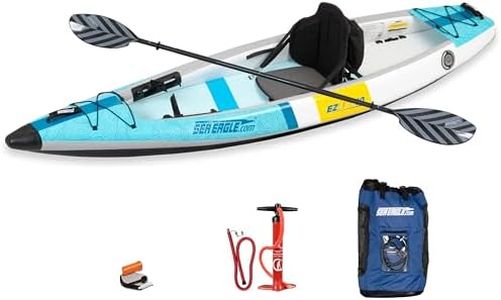
Sea Eagle EZLITE 10 Ultralight, All Woven, Drop Stitch, Rigid, High Performance, Easy Setup, 10' Solo Inflatable Kayak-Backpack, Seat, 4 Part 8' Paddle & Adjustable Footrests (EZLITE10 Pro Kayak)

Rating
10.0
Chosen by1,136
Material
Weight Capacity
Setup Time

Most important from
7 reviews

Material
Very sturdy build and easy to maneuver, making it a delight to paddle.
Weight Capacity
Light enough for everyone in the family to easily pick up and move around.
Setup Time
Takes only a few minutes to fully set up and get out paddling.

The Sea Eagle EZLITE 10 is designed for solo paddlers looking for a lightweight and easy-to-set-up inflatable kayak. One of its standout features is the all woven drop stitch construction, which contributes to its rigidity and performance on the water. Weighing just 26 lbs, it’s easy to carry, making it ideal for casual enthusiasts and those who may not have the strength for heavier kayaks. Setup is impressively quick, taking less than 4 minutes, which is a significant advantage for those who want to get on the water without hassle. The kayak’s V-bottom design enhances speed and tracking, providing a smooth paddling experience. The adjustable footrests add comfort, allowing for a more personalized paddling position.

The Sea Eagle EZLITE 10 is an excellent choice for beginner to intermediate kayakers seeking convenience and performance in a lightweight package, especially for those paddling in calm waters. Users looking for higher weight capacity or robust features for more challenging conditions might want to explore other options.

Rating
10.0
Chosen by1,136
Material
Weight Capacity
Setup Time

Most important from
7 reviews

Material
Very sturdy build and easy to maneuver, making it a delight to paddle.
Weight Capacity
Light enough for everyone in the family to easily pick up and move around.
Setup Time
Takes only a few minutes to fully set up and get out paddling.
#2

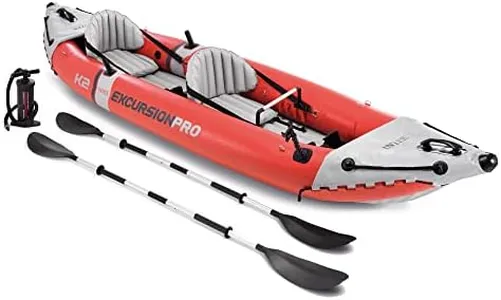
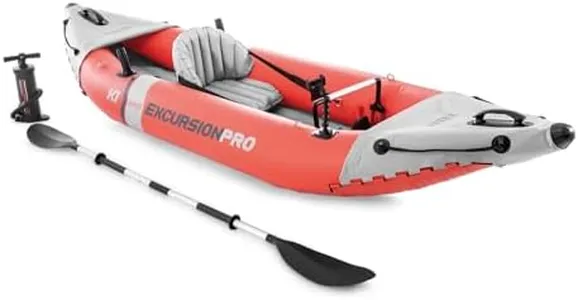
Intex 68309EP Excursion Pro K2 Inflatable Kayak Set: Includes Deluxe 86in Kayak Paddles and High-Output Pump – SuperTough PVC – Adjustable Bucket Seat – 2-Person – 400lb Weight Capacity

Rating
9.4
Material
Weight Capacity
Setup Time

Most important from
7430 reviews

Material
Despite its durability, long-term use shows scuffs and fold marks, which is expected for an inflatable kayak.
Weight Capacity
Very stable, even with a 280-pound adult in the high seating position, providing peace of mind with little ones on board.
Setup Time
Setup is quick and easy, taking just about 15 minutes to go from parking the car to being on the water.
Accessories
The included pump works well for both inflation and deflation, and the kayak fits back into the storage bag easily.

The Intex 68309EP Excursion Pro K2 Inflatable Kayak is a reliable choice for those looking to enjoy kayaking with a partner. Made from super-tough PVC, it offers impressive durability against abrasions, impacts, and UV rays. The kayak accommodates up to 400 pounds, making it suitable for two adults or one with extra gear. Its length of 12.7 feet provides a good balance between stability and maneuverability, thanks to the high-pressure inflation system and removable skegs for various water conditions.

Setting up the kayak is straightforward, with spring-loaded valves that simplify inflation and deflation, meaning you can hit the water quickly. Storage is practical, featuring extra space in the bow and stern, complemented by stainless steel D-rings for securing your belongings.

The kayak's weight of 44.7 pounds can be a bit cumbersome for some, especially when transporting it. Although it's foldable, it may still require some effort to carry, particularly over longer distances. The accessories included, such as paddles, a high-output pump, and fishing rod holders, are excellent, but some users might prefer additional features like built-in storage compartments. This kayak is well-suited for casual outings and fishing trips, making it a great choice for families or friends looking to explore lakes or calm rivers together.

Rating
9.4
Material
Weight Capacity
Setup Time

Most important from
7430 reviews

Material
Despite its durability, long-term use shows scuffs and fold marks, which is expected for an inflatable kayak.
Weight Capacity
Very stable, even with a 280-pound adult in the high seating position, providing peace of mind with little ones on board.
Setup Time
Setup is quick and easy, taking just about 15 minutes to go from parking the car to being on the water.
Accessories
The included pump works well for both inflation and deflation, and the kayak fits back into the storage bag easily.
#3

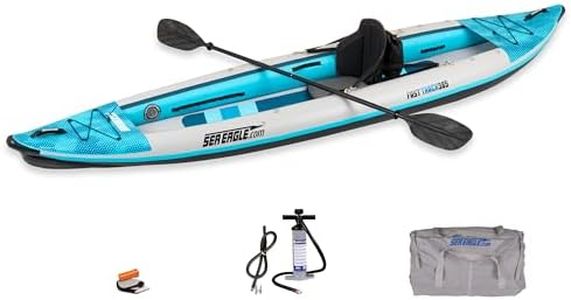
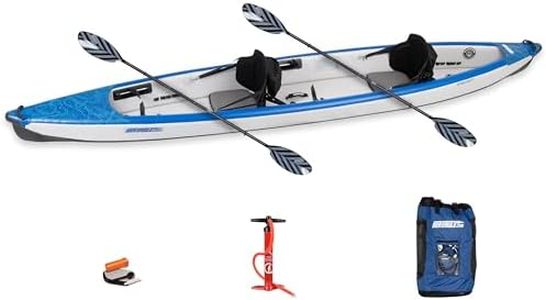
Sea Eagle 385FT Redesigned Fasttrack Inflatable Kayak 12'8" 2 Person Touring Kayak, Attached Rigid High-Pressure V-Bottom, Smoother Paddling Experience-Light Weight (385FT Fasttrack Pro Solo)

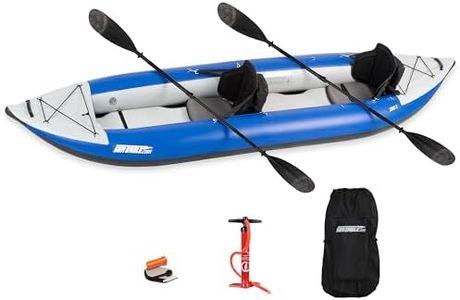
The Sea Eagle 385FT FastTrack inflatable kayak is designed for two to three people and offers standout features that make it appealing for touring and casual paddling. Its construction uses durable polypropylene material and includes a high-pressure drop stitch floor and keel, which helps the kayak paddle straighter and faster than typical inflatable models. At about 12.5 feet long and 3 feet wide, it provides good stability and space for up to 635 pounds of weight, making it suitable for couples or small groups. Weighing just 31 pounds, it’s relatively light and easier to carry compared to many other kayaks with similar capacity. The kayak comes with useful accessories like seats, paddles, a pump, and a kayak bag, so you have what you need to get started.

Setup time is generally quick thanks to the inflatable design and included pump. One thoughtful feature is the removable rear skeg, which improves tracking on flat water but can be taken off for more maneuverability in light whitewater conditions (Class II max). However, some users might find the polypropylene material less flexible or cushioned compared to PVC or other common kayak materials. The kayak is rated for Class II whitewater, so it’s not suited for more challenging rapids. Also, while the weight is light for its size, beginners might still need some help with inflation and transport due to its length. The included warranty adds confidence in durability.

This kayak suits recreational paddlers looking for an easy-to-transport, versatile touring kayak that balances speed, stability, and convenience for lakes, rivers, and mild whitewater.

Buying Guide for the Best Inflatable Kayaks

Choosing the right inflatable kayak can greatly enhance your paddling experience, whether you're a beginner or an experienced kayaker. Inflatable kayaks are known for their portability, ease of storage, and versatility. When selecting an inflatable kayak, it's important to consider several key specifications to ensure you get the best fit for your needs. Here are the main factors to consider and how to navigate them.
MaterialThe material of an inflatable kayak affects its durability, weight, and performance. Common materials include PVC, Hypalon, and Nitrylon. PVC is lightweight and affordable but may not be as durable as other materials. Hypalon is more durable and resistant to UV rays and chemicals, making it ideal for long-term use. Nitrylon is eco-friendly and puncture-resistant but can be heavier. Choose a material based on how often you plan to use the kayak and the conditions you'll be paddling in.
Weight CapacityWeight capacity refers to the maximum weight the kayak can safely carry, including the paddler and any gear. It's important to choose a kayak with a weight capacity that exceeds your total weight to ensure stability and performance. For solo paddlers, a capacity of 250-300 pounds is usually sufficient. For tandem kayaks or those carrying extra gear, look for capacities of 400 pounds or more. Consider your weight and the weight of your gear to select the appropriate capacity.
Length and WidthThe length and width of an inflatable kayak influence its speed, stability, and maneuverability. Longer kayaks (12 feet and above) are generally faster and track better, making them suitable for open water and long-distance paddling. Shorter kayaks (under 10 feet) are more maneuverable and easier to handle, ideal for rivers and tight spaces. Wider kayaks offer more stability, which is great for beginners or those who prioritize stability over speed. Consider where you'll be kayaking and your skill level when choosing the length and width.
Number of ChambersInflatable kayaks typically have multiple air chambers for safety. If one chamber gets punctured, the others can keep the kayak afloat. Most kayaks have 2-3 main chambers, but some high-end models may have more. More chambers generally mean better safety and stability. If you plan to kayak in remote or challenging conditions, opt for a kayak with more chambers for added security.
Setup TimeSetup time refers to how long it takes to inflate and prepare the kayak for use. Some kayaks can be set up in as little as 5-10 minutes, while others may take 20 minutes or more. If you value convenience and quick setup, look for kayaks with efficient inflation systems and fewer parts. Consider how much time you're willing to spend on setup and choose accordingly.
AccessoriesMany inflatable kayaks come with accessories such as paddles, pumps, repair kits, and carrying bags. These can add value and convenience, especially for beginners who may not have their own gear. Check what accessories are included and consider if they meet your needs. If you already have some equipment, you might prioritize other features over included accessories.

FAQ